
In the rapidly evolving landscape of global technology, a new narrative is emerging regarding Europe’s role in the artificial intelligence revolution. While headlines often focus on Silicon Valley or Chinese tech giants, a groundbreaking study has shifted the spotlight toward Central Europe. The LinkedIn AI-Skills-Report: Deutschland als Hidden Champion bei KI-Talenten reveals that Germany is not just participating in the AI race; it is quietly building a powerhouse of specialized expertise that could redefine the continent’s technological sovereignty.
For years, critics argued that the German economy might lag behind in the "AI gold rush" due to strict regulations and a traditional manufacturing focus. However, the LinkedIn data suggests a different reality. The report highlights a massive surge in AI-related competencies among the German workforce, driven by a combination of academic excellence, a robust industrial base, and a proactive integration of machine learning into traditional sectors. This shift marks a turning point where "Made in Germany" begins to merge with "Powered by AI."

The Rise of the "Hidden Champion" in AI Skills
The term "Hidden Champion" was traditionally reserved for specialized German SMEs (Mittelstand) that dominate global markets in niche manufacturing. Now, this title is being applied to the German workforce’s proficiency in artificial intelligence. According to the LinkedIn AI-Skills-Report: Deutschland als Hidden Champion bei KI-Talenten, the growth isn’t just in the number of people who know about AI, but in the depth of their practical applications.
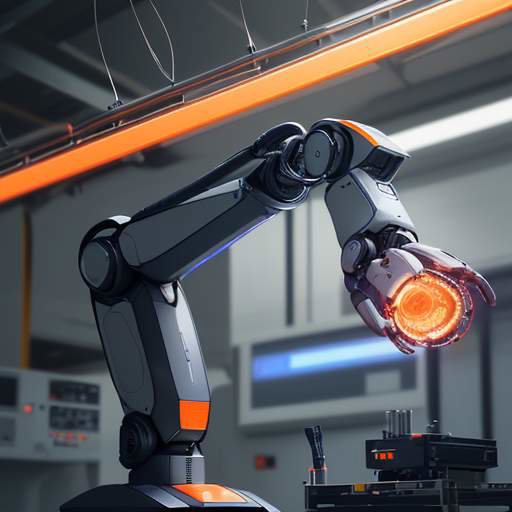
German professionals are increasingly integrating AI into industrial automation, logistics, and healthcare. This is not a superficial adoption; it is a structural integration. While other regions might focus on consumer-facing chatbots, German expertise is leaning toward "Industrial AI"—optimizing supply chains, predictive maintenance for heavy machinery, and high-precision manufacturing.
This surge in skills is also bolstered by the rollout of advanced infrastructure. For instance, the advancement of the 5g standard deutschland provides the low-latency backbone necessary for real-time AI processing in industrial environments. As 5G networks become more pervasive, the gap between theoretical AI and practical, real-world application closes significantly.
Data Sovereignty and the Path to Independence
One of the primary reasons for this rapid skill acquisition is the unique regulatory environment in Europe. Because of strict data privacy laws, German companies have had to become experts in "sovereign" solutions. They cannot simply outsource their entire infrastructure to any provider; they must build systems that are compliant, secure, and locally manageable.
This necessity has forced a level of sophistication in AI development that many other regions can overlook. When German engineers build AI models, they do so with an inherent focus on how data sovereignty impacts the future of their systems. By mastering these complexities early, German professionals are becoming the go-to experts for companies that want to innovate without sacrificing privacy.
This "forced" expertise creates a high barrier to entry for competitors and a massive opportunity for German firms. They aren’t just building AI; they are building compliant and secure AI. This distinction is vital as the global market moves toward more regulated tech environments. The skill set required to navigate the nuances of European law while maintaining high-performance machine learning models is a niche that Germany is currently dominating.

Security and Authentication in the AI Era
As AI systems become more integrated into daily workflows, the "attack surface" for cyber threats expands exponentially. A major component of the LinkedIn report’s findings is the correlation between AI literacy and cybersecurity awareness. To deploy a large-scale AI model, a company must first ensure that the access points are impenetrable.
The transition away from traditional security methods is accelerating in Germany. Many organizations are moving toward modern authentication methods for 2026 to protect their AI assets. By adopting technologies like Passkeys, German companies are creating a "hardened" environment where AI can operate safely. This dual focus—mastering the intelligence of the AI and the security of the infrastructure—is what defines the "Hidden Champion" status.

The Role of Infrastructure and Cloud Evolution
No AI revolution can happen in a vacuum. It requires massive computational power and reliable connectivity. While the global trend has been toward centralized cloud services, many German firms are looking for more localized control over their data. This has led to a significant movement in rethinking cloud strategies in Germany.
By bringing some data back from public clouds or utilizing hybrid models, German companies are creating "sovereign clouds." This infrastructure allows them to run AI models locally or on private clouds where the data remains under their direct control. This architectural choice is a direct response to the need for security and compliance, and it has fostered a unique ecosystem of local cloud providers who specialize in high-performance computing for AI.
The synergy between 5G, localized cloud infrastructure, and AI expertise creates a "triple threat" of capability. When a German company implements an AI solution, they are often doing so on a network that is both fast (5G) and secure (Sovereign Cloud), managed by a workforce that understands the intricacies of the technology.
Education and the Talent Pipeline
How did Germany become a "Hidden Champion" so quickly? The answer lies in the education system and the vocational training model. Unlike many regions that focus solely on academic degrees, the German model excels at creating "practitioners." These are professionals who don’t just know the math behind a neural network but know how to implement it in a manufacturing line or a logistics chain.
The LinkedIn report highlights a significant increase in "applied" AI skills. This means that while some regions are producing many researchers, Germany is producing many implementers. These professionals are the ones who take a raw AI model and turn it into a product that saves a factory 20% in energy costs or helps a hospital manage patient flow more efficiently.
Furthermore, the collaboration between universities and industry leaders has created a pipeline where students enter the workforce with a clear understanding of how AI interacts with existing industrial standards. This practical focus ensures that the "AI talent" isn’t just a bubble of enthusiasts, but a solid foundation for the next generation of German industry.

Conclusion: The Future of German AI
The LinkedIn AI-Skills-Report: Deutschland als Hidden Champion bei KI-Talenten serves as a wake-up call for the global tech community. It proves that the "center" of innovation isn’t always where the loudest headlines are. Germany’s strength lies in its ability to marry high-tech innovation with industrial reliability and rigorous security standards.
By mastering the nuances of data sovereignty, leveraging 5G infrastructure, and focusing on practical, industrial applications, German companies are building a sustainable model for AI growth. They aren’t just chasing the next trend; they are building the infrastructure, the skills, and the security protocols that will define how AI is used in the real world for decades to come.
As we move toward 2026 and beyond, the "Hidden Champion" status of German AI talent will likely become a cornerstone of European economic stability. While others may lead in consumer-facing gadgets, Germany is positioning itself as the backbone of industrial AI—the engine room where the most critical, complex, and secure AI applications are being built. The revolution isn’t just happening; it’s being engineered with German precision.



















Neueste Kommentare